Where did all the fireflies go?
Hold your breath
No more movement in the night
Where did all the fireflies go?
I heard someone say
They ain’t never coming back
~J.J. Grey and Mofro, Fireflies
You know how they say that Heaven must look a lot like Kentucky? Well, if that’s true, I live on 10 acres of that celestial ground. We can clearly see the summer triangle constellation (Altair, Deneb, and Vega) on a clear night. We hear the yips and barks of the coyotes at dusk as they call for a mate and the rush of the Boonesboro River during the spring rains. We’ve seen bobcats, red tailed hawks, foxes, and – occasionally – even a bald eagle on our land. We see magnificent sunrises and sunsets almost daily. But you might be surprised to learn about my favorite part of living on what we call the “dodgy end” of Quisenberry Lane.
Fireflies. Sometimes called lightning bugs. Actually, beetles and not flies at all, fireflies get their name from the family Lampyridae, meaning to shine.
And shine they do.
Now if, like me, you grew up catching lightning bugs in a jar – poking holes in the top of the saran wrap “so they could breathe” – you are probably dismayed that your children and grandchildren aren’t all doing this. Climate change, loss of habitat, light pollution, and abundant use of pesticides have created an alarming decrease in the firefly population. Many firefly species are currently on the IUCN “red list” (meaning there is a distinct extinction threat).
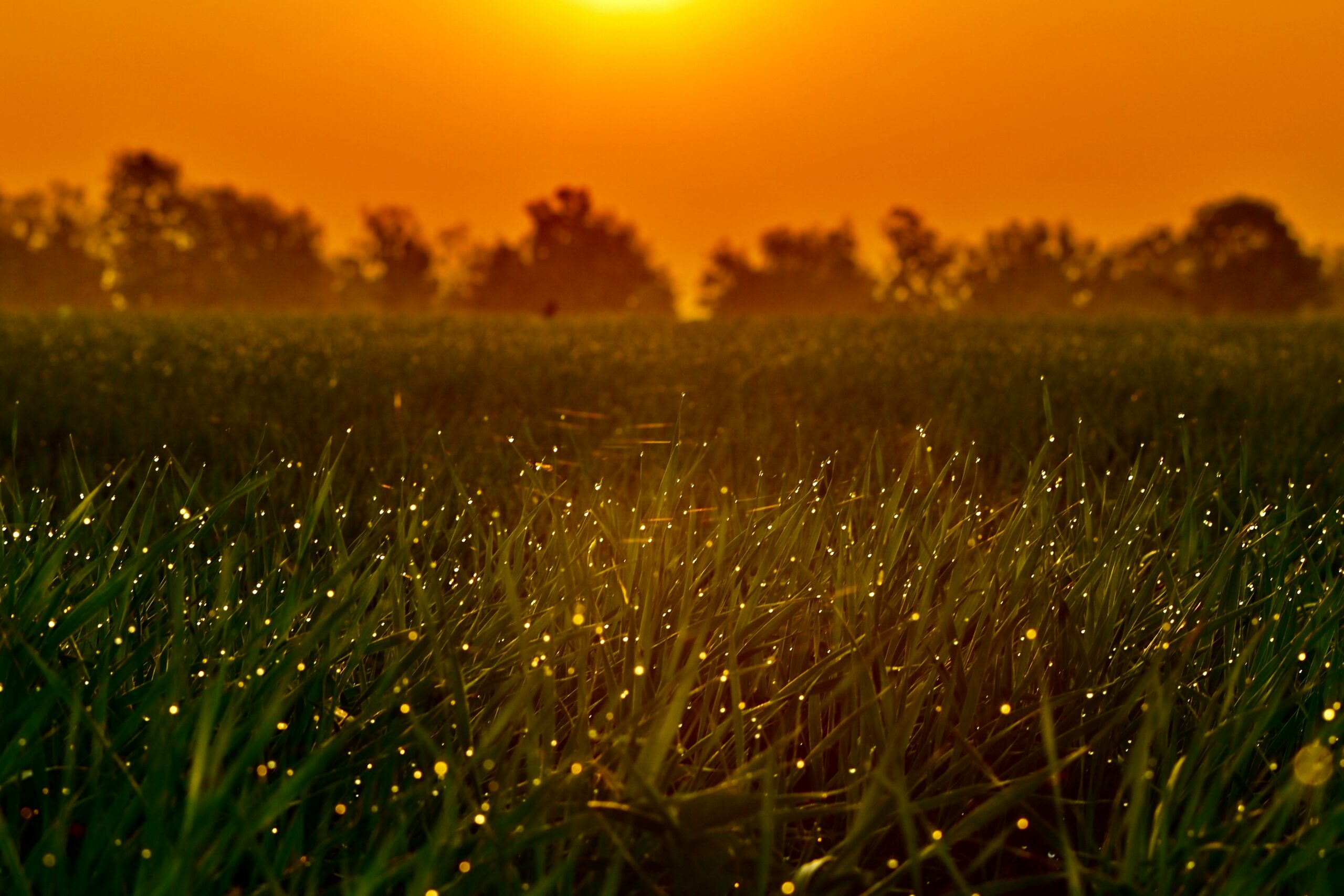
In Kentucky, we have around 17 different species of lightning bugs. On Quisenberry Lane, we mostly see synchronous lightning bugs, which is the most magical of all. Most of the summer, they take a deep breath – as oxygen mixes with the enzyme luciferase to create bioluminescence – and flash their hind ends in hopes of attracting a mate. The greenish-yellow flashes occur randomly, sporadically. But for a fleeting week or two in late June, this species flashes in symphony, creating a rhythm of pulsating light. When my field becomes a glimmering carpet of fairy light, I remember that magic is real.
This song of light begs us to slow down and listen. Summer is the only time of the year I will gladly stay awake past sunset, watching the lightning bugs dance. Elated and heartsick in equal measure, I feel blessed to witness this light display and disheartened that humans are so short-sighted, caring not that this light display is vanishing.
I learned that males and females use specific patterns of light to find and recognize each other. Each species has its own rhythm and frequency, a unique code in a vast symphony of signals. This silent, flickering conversation speaks to the importance of connection. The firefly’s light is both a personal signature and a bridge to another. In a world where communication is often loud and constant, fireflies remind us of the power of quiet clarity and authentic expression.
What light do I carry, and how will I use it to connect?
The fireflies do not answer. They just keep sparkling.

