
In the last year, several people in recovery I know have “fallen off the wagon.” I’ve seen a return of Disordered Eating in lots of my yoga students. My class sizes have swelled and my private somatic therapy sessions* are waitlisted. I’m hearing, over and over, how the things that once helped people heal no longer feel like enough. How their talk therapy and meditation practices are no longer providing the same amount of insight and relief. They are baffled as to why, despite doing “all the right things,” they still feel stuck, overwhelmed, and on edge.
In a world constantly on fire, it’s natural to reach for solutions that promise clarity. We think it through with our therapist. We meditate to rise above. So why do those practices suddenly feel strangely ineffective? It’s not because they don’t work (they do!), It’s because they’re being asked to do a job the nervous system hasn’t yet been prepared for.
Before we can rewire the brain, we must regulate the nervous system.
The nervous system predates thought. Long before language, logic, or political identity, our bodies evolved to answer one question. Am I safe? When the answer feels like “no,” the nervous system shifts into survival mode – fight, flight, freeze, or fawn. In that state, the brain is designed only for speed and protection, not insight, nuance, or long-term change. Reason narrows, curiosity disappears, and empathy can shut down.
You can understand your patterns perfectly in therapy, but if your body is chronically braced for the next disaster, those insights won’t land. You can meditate daily, but if your nervous system is constantly flooded by political outrage or a sense of existential threat, stillness may feel inaccessible or even unsafe.
The problem is not a lack of discipline or intelligence. It is dysregulation. If you’re dysregulated, then you tend to just push through or override what you’re thinking and feeling. So, your healing practice becomes about control, not regulation.
Politics, especially in times of polarization and perceived moral emergency, speaks directly to the nervous system. It frames the world in terms of danger, enemies, and urgency, triggering a sustained survival response. We’re doom-scrolling instead of sleeping, snapping at those we love most, pinballing quickly between emotions: numb one moment and incandescent with rage the next. When this happens, the prefrontal cortex, the part of the brain responsible for reflection, integration, and change, pretty much goes offline. You cannot rethink your way out of a state your body believes is life-or-death.
Regulation is the bridge.
Regulating the nervous system does not mean disengaging, feeling calm all the time, or ridding yourself of anxiety or discomfort. It’s an adaptive capacity to feel a wide range of emotions without the nervous system shutting down, bracing, or taking over. It means restoring enough internal safety that the brain can come back online. It means telling the body, again and again, at this moment, I am safe. Only from that place can new neural pathways form. Only from that place can insight turn into embodied change.
This is why practices that work with the body are often what people are missing right now. We need more slow, extended exhales, gentle movement, humming, singing, and dancing. We need to be in safe, attuned human community. These are not lesser practices than cognitive insight, but foundational requirements for them. They calm the vagus nerve, lower stress hormones, and reopen the brain’s capacity for learning and flexibility. This is why your therapist might have you shake or bounce before you sit and talk, or why your yoga teacher cues the meditation or breathwork at the end of the class, after you have moved your body.
Think of it like trying to rewire a house during an electrical storm. You can have the best blueprint in the world, but if the system is overloaded and sparking, nothing new can be installed safely. Regulation quiets the storm. Then rewiring can occur.
In overwhelmed political times, this order matters more than ever. If we skip regulation, we risk becoming more reactive instead of more effective. We confuse constant activation with moral seriousness.
We need safety before strategy, grounding before growth, and regulation before rewiring.
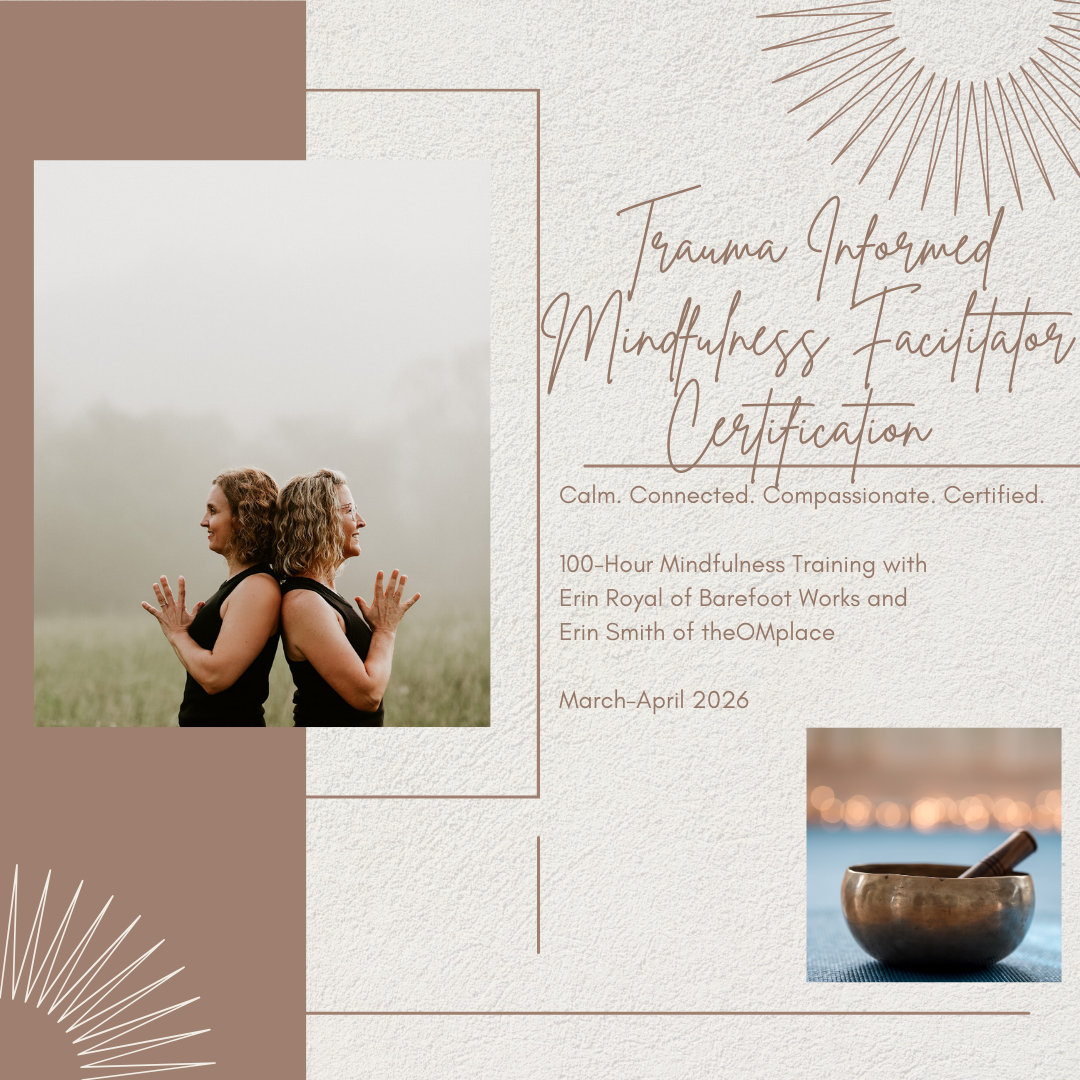
Want to learn more about the nervous system? Check out our Trauma-Informed Mindfulness Certification Program!
*I am not a licensed mental health practitioner. I am a certified mindfulness coach and a Therapeutic Yoga Teacher. I am more like a physical therapist than a talk therapist.

