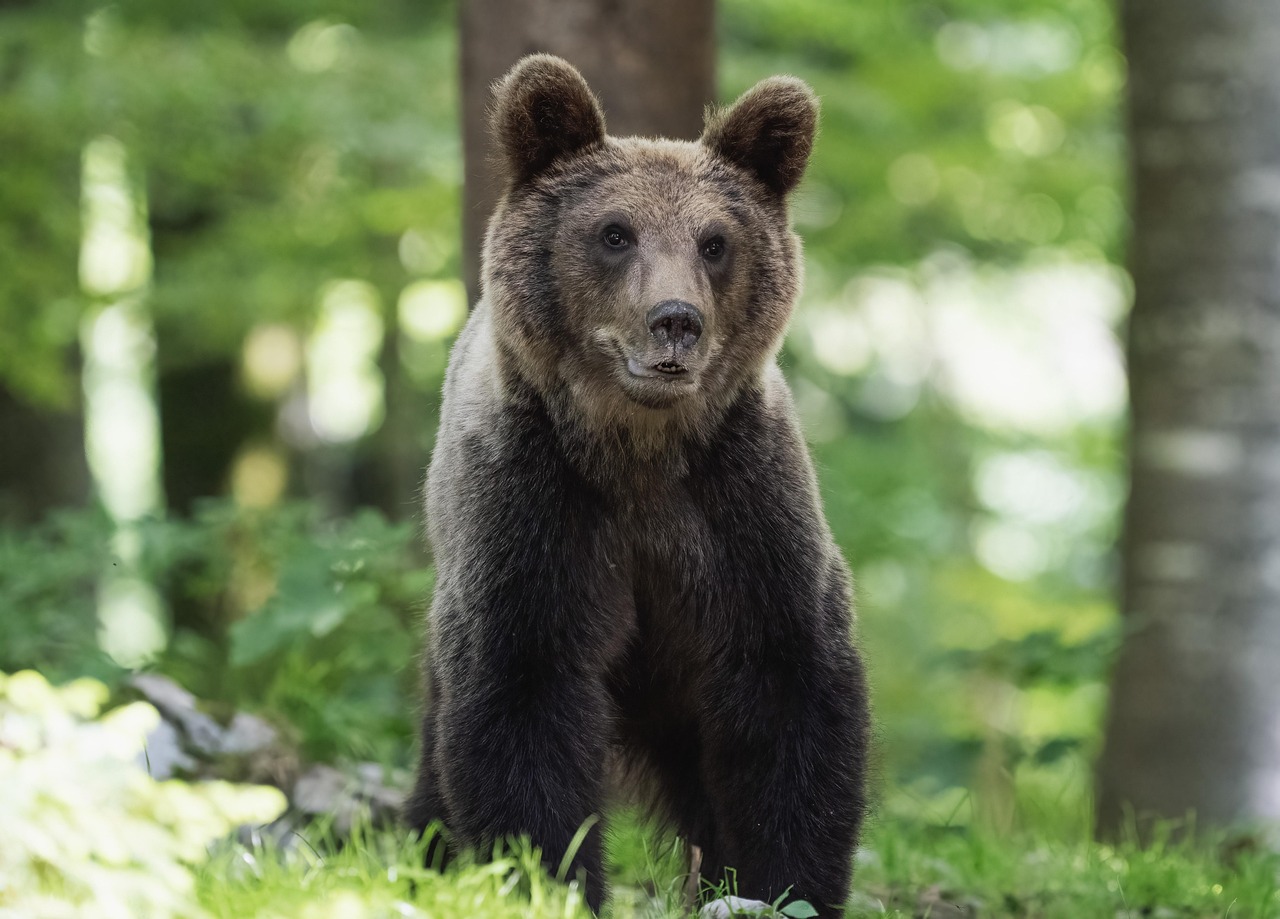
Someone spotted a black bear just a few scant miles from Quisenberry Lane recently, posting online some incredible black-and-white selfies the bear took with their wildlife camera. I’ve been waiting almost 30 years to see one on my property. Everyone responded with bring your pets inside and get your gun, but they are thinking about brown bears, which tend to be far more aggressive than black bears. Though black bears will tear it up if you threaten their cubs, this guy was probably just lumbering about, looking for an open trash can to scavenge.
Once abundant throughout the United States, habitat loss and unregulated hunting made the American black bear (Ursus americanus) almost extinct in Kentucky. Some of the oak forests logged at that time now have repopulated with fully mature trees and the bear has made a tremendous comeback.
Since I was a little girl, I have been in love with bears. Maybe it was because of Mama Bear and Teddy Bear Love, my beloved stuffed animals. Maybe it was learning We’re Going on a Bear Hunt in kindergarten. Or reading the Little Bear series by Maurice Sendak, chronicling the adventures of Little Bear, his mother, and his best friends Cat, Duck, and Hen.
But I will never forget learning about hibernation in third grade. When the air sharpens and the leaves fall, bears don’t rage against the dying season. Instead, they gorge themselves on nuts, berries, and acorns. Then they find a dark, safe cave or den and sleep for several months, heart slowed, breath quieted, body curled into itself. When they awaken from their extended torpor, a specialized metabolism means their bones and muscles will be relatively unchanged.
Sounds heavenly. I think about bears as I mentally prepare for Daylight Saving Time this weekend. I think about bears as I load my dinner plate with starchy carbohydrates and pour red wine up to the top of the glass. I think about bears as I don my favorite fuzzy pajamas and tie-dyed socks. While humans do not actually hibernate, we do need more sleep during the colder months, ideally an additional 1-2 hours than during summer. Basically, when there is less available light, human brains produce more melatonin, which can make us drowsy and sets us up for longer states of dreaming sleep. And we are drawn to heavier, nourishing meals; fluctuations in our hunger hormones and lower serotonin levels make us hungrier than in times of more abundant sunlight.
This makes sense. All animals winter to some degree or another, and humans are animals. Even for those who grapple with getting good, sound sleep, wintering is necessary. Seasonality is ubiquitous, despite our encultured drive to fuss and flurry on all cylinders at every moment of every day, and especially so after we “fall back” at Daylight Saving, which ironically coincides with the start of the the frantic holiday season.
Humans can be so exhausting. Animals and plants don’t need to be taught how to winter well. They don’t pretend it’s not happening, barreling through their days with the same vigor and speed of summer. Instead, they lean into it, sleeping and snuggling. It’s a natural part of existing.
Rest is not the opposite of growth, but a part of it. If we want to wake up to our life, we must first start in a state of slumber.
Consider Jesus leaving the tomb on Easter morning.
Or Princess Aurora stirring at love’s true kiss.
Or Rip Van Winkle, blinking his eyes to find he’d lost 20 years.
Or the Buddha insisting he was not enlightened, only awake.
Many Shamanic cultures celebrate a coming-of-age rite where a young person is buried alive overnight, communing with Mother Nature to be reborn in their truest form the following morning. Saint Irenaeus, the bishop of Lyon, said, “The Glory of God is the human person fully alive”.
Waking up is holy work. Be a bear.

